Bagamoyo
Bagamoyo
Bagamoyo (historic port city) — Bagamoyo was the most important trading port of the east central coast of Africa in the late 19th century. Bagamoyo’s history has been influenced by Indian and Arab traders, by the German colonial government and by Christian missionaries.
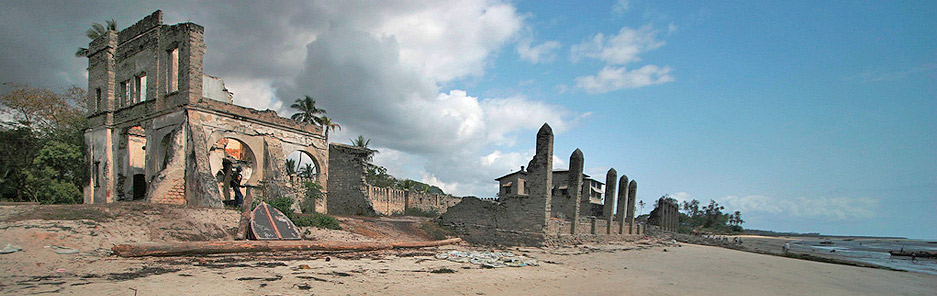
About 5 km (3 mi) south of Bagamoyo, the Kaole Ruins with remnants of two mosques and a couple of tombs can be dated back to the 13th century, showing the importance of Islam in those early Bagamoyo times. Until the middle of the 18th century, Bagamoyo was a small and insignificant trading center where most of the population were fishermen and farmers. The main trading goods were fish, salt, and gum, among other things.
The town of Bagamoyo was one of the most important trading ports on the East African coast and the penultimate stop of slave and ivory caravans travelling on foot from Lake Tanganyika on their way to Zanzibar. Missionaries active in abolishing the slave trade made Bagamoyo, whose name means ‘bury my heart’ in Kiswahili, a center for their activities.
Bagamoyo Stone Town — Bagamoyo is surrounded by old buildings of the previous generation, beautiful Arab architecture with thick walls of Earth fitted with well-carved doors made of thick African hardwood. On your walk through narrow streets between Old buildings of Bagamoyo stone town, you will visit the German Colonial Administrative block, Art market, Old post office, 1st Tanzania Primary School, Old Mosques, Hanging tower, Caravan Serai Museum and the fish market. On your walk along this Indian Ocean beach, you can visit a center for dhow sailboat building and get to know how local people build their boats.